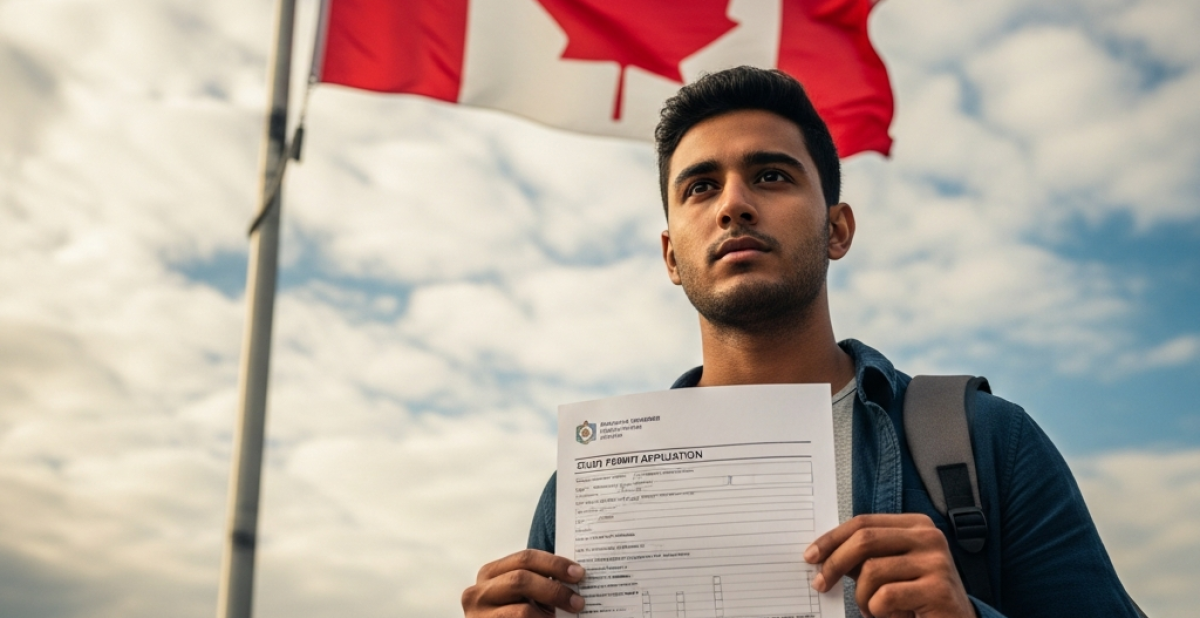
A provincial attestation letter, or PAL, is a letter from a province or territory confirming that a study permit applicant has a place within that province’s share of Canada’s cap on study permit applications. Most applicants need one. Students applying to primary or secondary school, from Kindergarten to Grade 12, do not.
Based on Immigration, Refugees and Citizenship Canada (IRCC) pages. Immigration rules change often, and this is not immigration advice. Check IRCC before you apply. Checked on 17 November 2026.
Que signifie la lettre ?
- It comes from the province or territory where you plan to study, and confirms there is space for you.
- You receive it through the designated learning institution you plan to attend, after you are accepted.
- It is signed by the province or territory and includes your name, date of birth and address.
- You upload it with your study permit application. An application that needs a PAL and does not include one, or proof of an exemption, is not accepted for processing.
Students going to Quebec use a Quebec Acceptance Certificate instead.
Who does not need one
| le Groupe | Poste |
|---|---|
| Primary and secondary students, Kindergarten to Grade 12 | Exempter |
| Master’s and doctoral students at a public designated learning institution | Exempt since 1 January 2026 |
| Study permit holders extending at the same institution and the same level of study | Exempter |
| Certain Government of Canada priority groups and vulnerable cohorts | Exempter |
| Most college and undergraduate university applicants | PAL required |
IRCC has an online tool that tells you whether you need a PAL based on your answers. Use it before you apply.
Why the letter exists
Canada introduced a cap on study permit applications in 2024. Each province and territory is given an allocation and uses attestation letters to assign its spaces. For 2026, IRCC set the number of application spaces under the cap at 309,670.
What high school families should do
- Get the letter of acceptance from the school. All primary and secondary schools in Canada are designated learning institutions.
- In the study permit application, state that the student is applying for primary or secondary study, which is why no PAL is attached.
- Prepare the other documents: proof of financial support, passport, and for a minor under 17 without a parent in Canada, a custodianship declaration.
Later, for college or university
The exemption belongs to the level of study, not to the student. A student who finishes high school in Canada and then applies for an undergraduate or college program will normally need a PAL for the new study permit, through the institution that accepts them. Plan for that step during Grade 12.
À l'Académie USCA
USCA Academy is a private school at Unit 2, 977 Pantera Drive, Mississauga, inspected by the Ontario Ministry of Education (BSID 881623). We issue the letter of acceptance needed for a study permit application. The admission steps are on our page d'admission. Voir également Comment s'inscrire au lycée au Canada et étudier au Canada en tant qu'étudiant international.
Foire aux questions
Does a high school student need a PAL?
No. Kindergarten to Grade 12 students are exempt.
Who gives me the PAL?
The province or territory issues it, and you receive it through your institution.
Will I need one after high school?
Usually yes, for a college or undergraduate program.